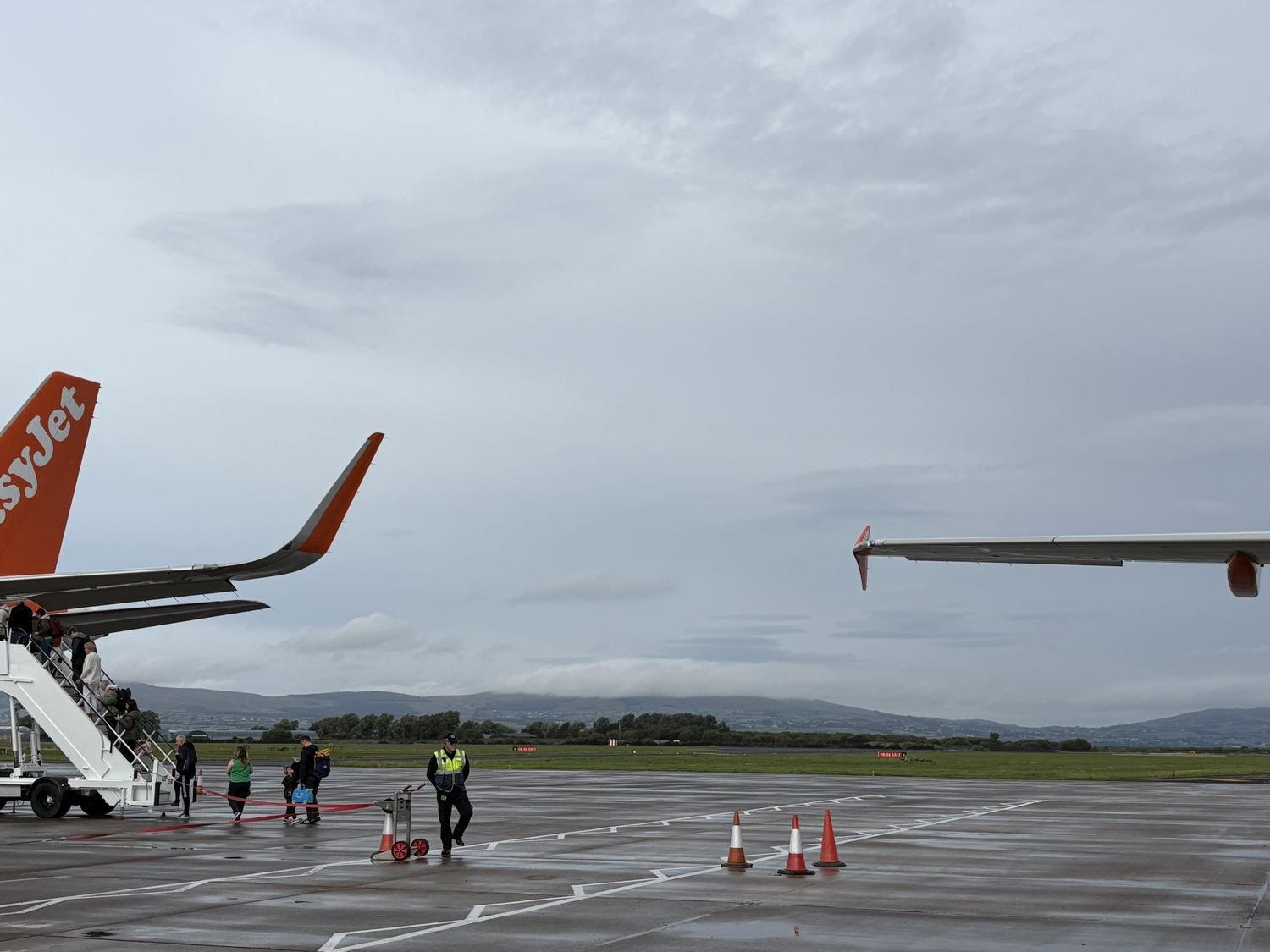
There is a factory at Broughton, in Flintshire, that most people have never heard of and almost everyone has flown on. It makes wings. Not parts for wings: whole wings, for the Airbus A320 family, the A330 and the A350. Airbus calls the site its Home of Wings, and around 6,000 people work there.
On 22 September 2026 Airbus announced it is spending £150 million on the place. The building that used to make A380 wings, mothballed when that programme ended, is being converted into an A321 wing line: six wing production jigs, an equipping line and a paint shop. About 480 new jobs are being created this year, 250 of them in the refurbished factory, and the first wing is already being built. All six jigs are expected to be running by the end of the year.
Why they need it
The reason is the order book. Airbus is working through a backlog of roughly 7,500 A320-family aircraft, and about three quarters of those are A321s — the longest member of the family and the one airlines currently want most.
Jerome Blandin, who runs Airbus's wing business, put the scale of it in one line: around the world today, an A320-family aircraft takes off or lands every two seconds, with wings designed and built in the UK.
That is the part worth sitting with for a moment. Every two seconds.
A very old aerodrome
Broughton has been building aircraft since before the war. The factory opened in 1939 for Vickers-Armstrongs, which built 5,786 Wellington bombers there. De Havilland took it on in 1948 and built a further 2,816 aircraft of various types. The wings have been the constant.
Finished wings leave by air, loaded into the Beluga and BelugaXL transporters that fly out of the adjacent runway at Hawarden. The A380's wings were too big even for that: they went out by barge down the River Dee.
What it means on the screen
The radar on my desk labels every aircraft with its type. On an ordinary day the list is dominated by one family — A319, A320, A321, over and over, because that is what short-haul Europe flies.
Every one of those labels is a Welsh wing. An easyJet A319, G-EZFT, crossed the screen at 14,675 feet as EZY149Y; its wings came from Flintshire. So did the A350's, if a BA or Virgin widebody passes over later in the day.
And the Boeings? Their 737 wings are assembled at Renton in Washington State. Although even there, the split winglets on the MAX begin as composite parts made by GKN at Cowes, on the Isle of Wight.
Not bad for a couple of unassuming factories, one on an estuary in North Wales and one on an island off Hampshire.
Sources
- Airbus invests into UK manufacturing to support global production ramp-up — Airbus
- Broughton, Flintshire — Wikipedia
- GKN to produce 737 MAX winglets — FlightGlobal
- Photographs: A320 wingtips by Ddoherty958 (CC0), A320 wing fairing by Olivier Cleynen (CC BY 4.0) and JAL A350 by S5A-0043 (CC BY 4.0), via Wikimedia Commons