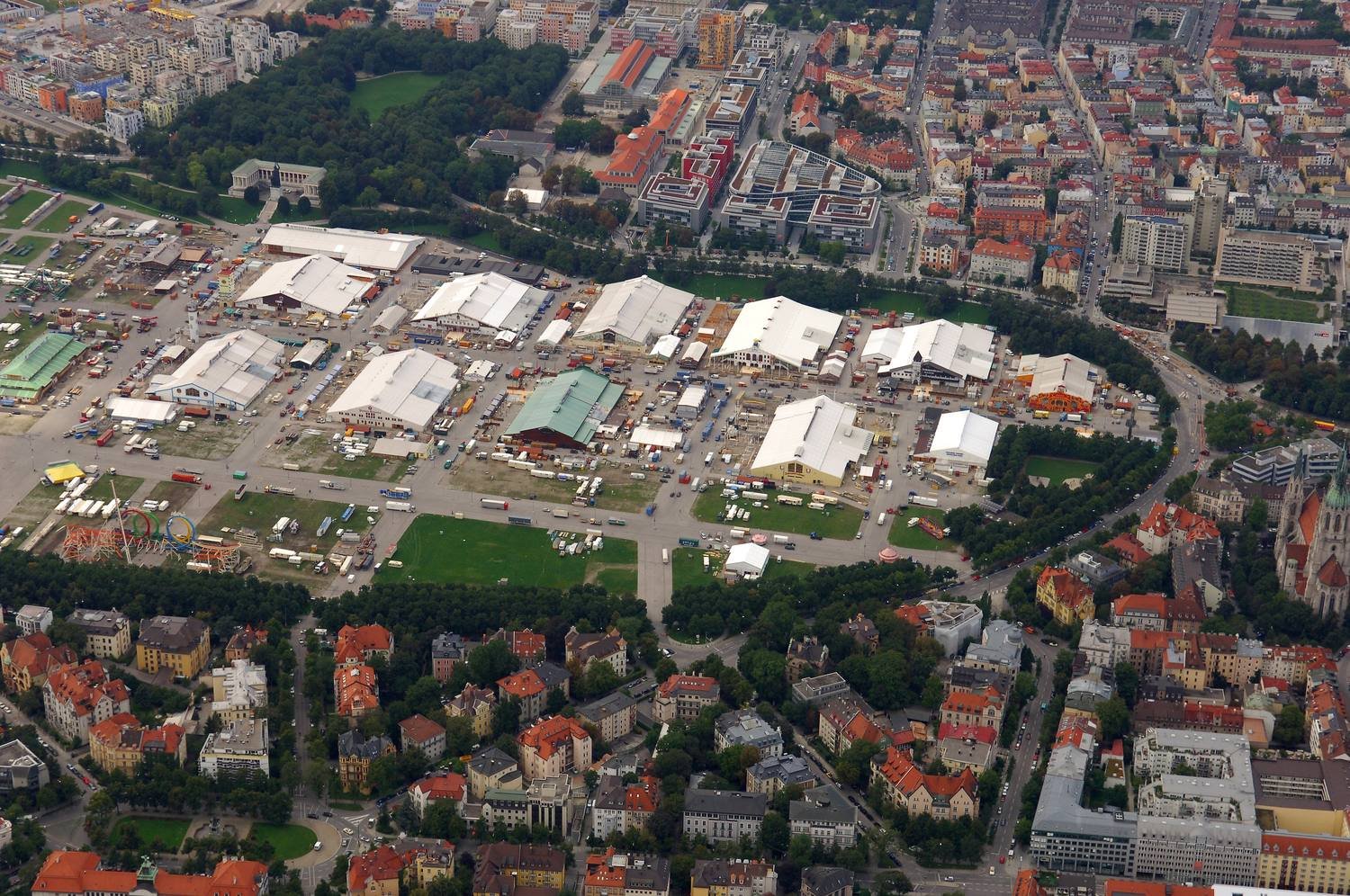
Oktoberfest opened on 19 September 2026 and runs until 4 October. Sixteen days, one site — the Theresienwiese, a stretch of open ground south-west of Munich city centre that spends most of the year as a car park and an events space.
The numbers are the interesting part. Around 6.5 million people attended in 2025. On average about 21 per cent came from outside Germany, and on the middle Saturday that rose to roughly 30 per cent. The countries sending the most visitors included the United States, Italy, the United Kingdom, Austria and Poland.
A fifth of six and a half million is a lot of people, and most of them are not driving.
What that does to the sky
Munich Airport's own advice for the period is blunt: passenger volumes during Oktoberfest can be very high, and it tells people to allow plenty of extra time at check-in, security and passport control on the way home.
For anyone watching traffic rather than queueing in it, that is the appeal. For sixteen days a single German city pulls in an unusual concentration of short-haul flying from across Europe, and a good share of it comes from Britain.
Why a thing called Oktoberfest mostly happens in September
It started as a wedding party. On 12 October 1810 Crown Prince Ludwig of Bavaria married Princess Therese of Saxe-Hildburghausen, and the city was invited to the celebrations on the field that still carries her name. It has run most years since, and is now described as the world's largest Volksfest.
Over the following century the start was pushed back into late September to make use of warmer evenings, so only the closing days fall in October at all. The rule now is that it ends on the first Sunday in October, extended to 3 October if that Sunday falls earlier, because 3 October is German Unity Day. That is how a sixteen-day festival in 2026 runs from 19 September to 4 October.
A new way in from this side
There is one more reason to look east this fortnight. On 17 September 2026 easyJet operated its first flights between London Southend and Munich, a new route for both the airline and the airport. Southend has had a run of new destinations this year, with Belfast City, Budapest, Edinburgh, Lyon and Sharm El Sheikh also announced.
It is a useful reminder of how quickly a route map changes. A city pair that did not exist a fortnight ago is now part of the pattern, and it opened in the exact two weeks when the destination is at its busiest.
Reading it off the screen
The radar on my desk does not know anything about beer tents. It shows the type, the registration and the callsign of whatever is within range, and the altitude it is at.
But an easyJet A319 climbing out and already at 14,675 feet, as G-EZFT was when it crossed the screen as EZY149Y, is an aircraft going somewhere in Europe. This fortnight, more of those somewheres than usual are Munich.
That is the quiet pleasure of watching what is overhead. The screen gives you the bare facts, and the calendar fills in the rest.
Sources
- Visiting the Oktoberfest 2026 — Munich Airport
- Oktoberfest — Wikipedia
- Oktoberfest 2025 in figures — Falstaff
- easyJet's first flights to Munich take off — London Southend Airport
- Photographs: Theresienwiese by zoesch (CC BY 2.0), Hofbräu beer garden by Usien (CC0) and easyJet A319 G-EZIR by Alf van Beem (CC0), via Wikimedia Commons